Buy ناسا.com ?
We are moving the project
ناسا.com .
Are you interested in purchasing the domain
ناسا.com ?
domain@kv-gmbh.de · 0541-91531010
Buy ناسا.com ?
Are you interested in astronomy and space science?
As an AI, I do not have personal interests or preferences. However, I am equipped with vast knowledge about astronomy and space science and can provide information and answer questions on these topics. **
What does astronomy research?
Astronomy research involves studying celestial objects such as stars, planets, galaxies, and other phenomena in the universe. Researchers use telescopes, satellites, and other instruments to observe and analyze these objects to better understand their properties, behavior, and evolution. By studying astronomy, researchers aim to answer fundamental questions about the origins of the universe, the nature of dark matter and dark energy, and the potential for life beyond Earth. **
Similar search terms for How
Top-Angebote
Products related to How:
-
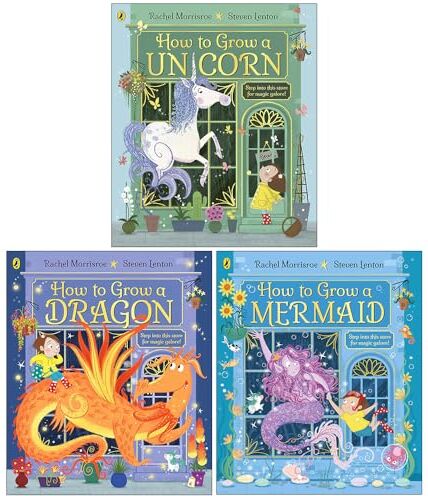
Puffin ltd How to Grow Series Collection 3 Books Set By Rachel Morrisroe (How to Grow a Unicorn, How to Grow a Dragon and How to Grow a Mermaid)How to Grow Series Collection 3 Books Set By Rachel Morrisroe (How to Grow a Unicorn, How to Grow a Dragon & How to Grow a Mermaid): How to Grow a Unicorn: A rollicking, rhyming read-aloud treat from wordsmith extraordinaire, debut author Rachel Morrisroe, and the ridiculously talented, bestselling Steven Lenton.Welcome to Mr Pottifer's Parlour of Plants: a magical shop with the most surprising plants you'll ever see! Sarah thinks she's discovered the perfect gift for her garden-loving grandma, but before you can say GARDEN FULL OF UNICORNS, things grow wildly out-of-hand! How to Grow a Dragon: A story that celebrates problem solving, kindness and resourcefulness.An unexpected delivery of dragodil seeds provides the perfect chance for Sarah and Mr Pottifer to grow helpful dragon pets for their customers - or does it? It turns out that these fiery dragons are not very well-behaved at all... and everything soon spirals into smoke-filled, out-of-control DRAGON CHAOS! Can Sarah's quick thinking and green fingers save the day? How to Grow a Mermaid: A new customer at the shop buys some mermaid seeds, and Sarah is only too happy to help him grow them. But when the plants are accidentally given too much sugar, their vines spread throughout the town, flooding the streets and causing a whole heap of MER-MAYHEM! Can Sarah and her new friend use their quick thinking and green fingers to save the day?19,99 £*Shipping: 2,99 £Secure redirect to the provider
-
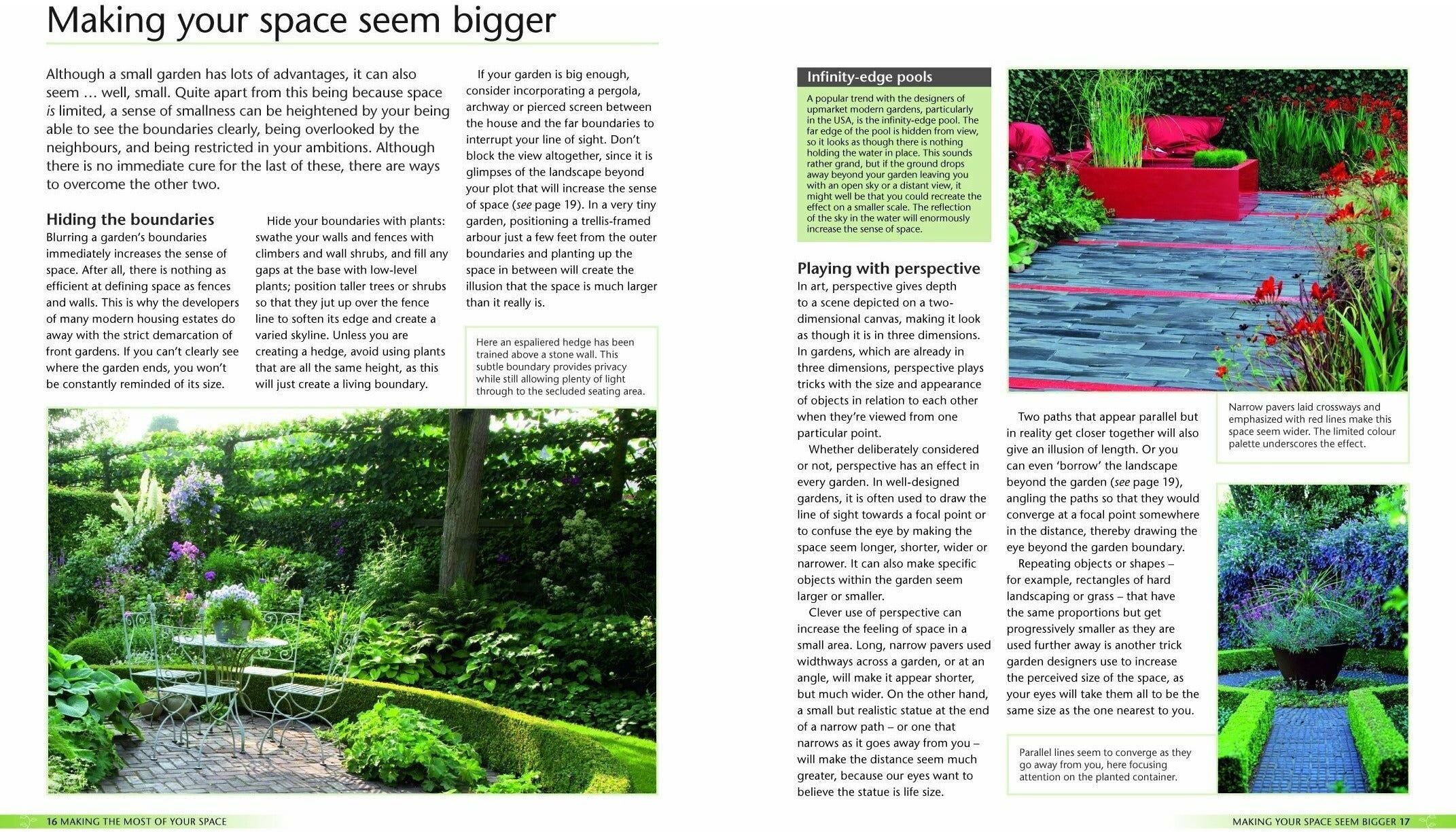
BBC Books Alan Titchmarsh How to Garden: Small Gardens (How to Garden, 27)Successful gardens can be created in the smallest spaces, and in this inspiring and practical guide Alan Titchmarsh shows how to transform even the tiniest outdoor area into an attractive garden. With ideas for maximizing space and advice on garden design, planning and plant selection, this is the definitive handbook for anyone wanting to create a private haven in limited space. Ideas for front gardens, side passages, courtyards, balconies, rooftops and windowsills Tricks to make small spaces seem larger How to use every inch of space, including containers Easy-to-follow landscaping plans for all garden shapes and styles Guidance on growing vegetables, herbs and fruit in small plots2,67 £*Shipping: 1,99 £Secure redirect to the provider
-
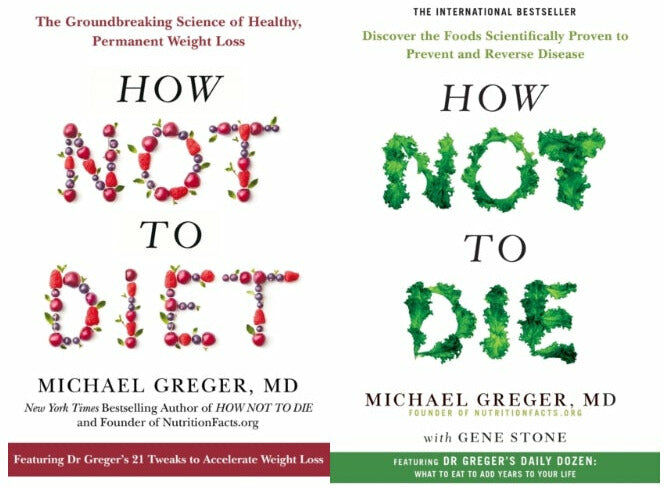
Pan Macmillan How Not To Die 2 Books Collection Set by Dr Michael Greger and Gene Stone ( How Not To Diet: The Groundbreaking Science of Healthy, Permanent Weight LHow Not To Die 2 Books Collection Set Dr Michael Greger and Gene Stone Title In This Set: How Not To Diet: The Groundbreaking Science of Healthy, Permanent Weight Loss, How Not To Die14,99 £*Shipping: 2,99 £Secure redirect to the provider
-
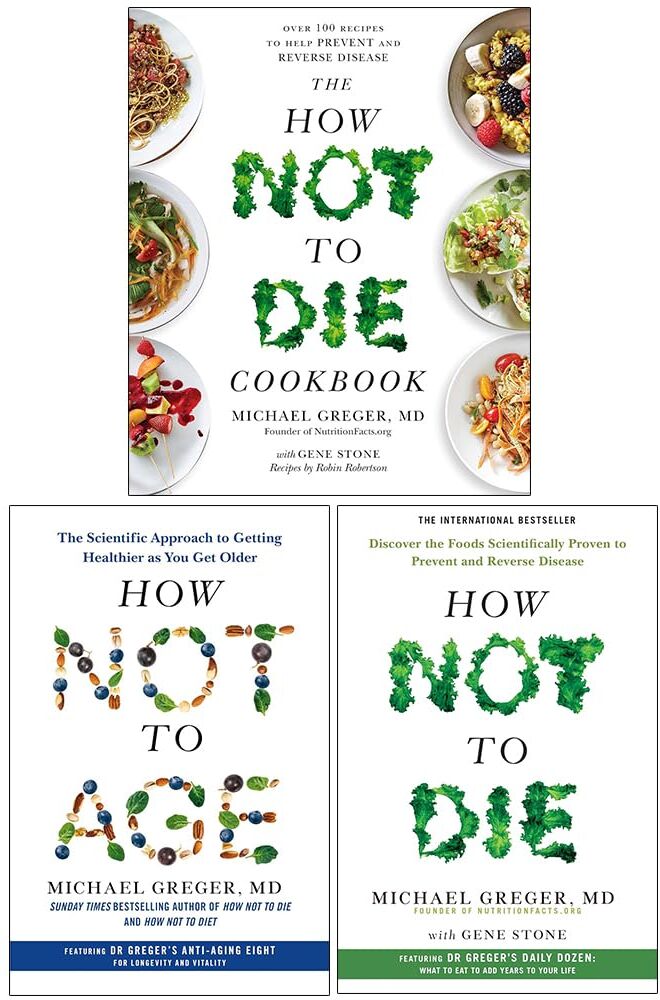
Bluebird/Pan ltd The How Not to Die Cookbook, How Not to Age and How Not to Die 3 Books Collection SetThe How Not to Die Cookbook, How Not to Age & How Not to Die 3 Books Collection Set: The How Not to Die Cookbook: Dr Michael Greger, founder of the wildly popular website NutritionFacts, takes his comprehensive, lifesaving science into the kitchen. Why suffer from disease and ill health when the right food is proven to keep you healthy, and without the side effects of drugs? We can avoid heart disease, cancer and our other biggest killers if we use food as medicine, and the How Not To Die Cookbook offers a sustainable and delicious guide to preparing and eating the foods that will prevent and reverse fatal diseases. How Not to Age: Dr Michael Greger digs into the top peer-reviewed anti-ageing research to deliver a complete and optimal guide with simple steps to extend your lifespan and slow the adverse effects of ageing.Inspired by the dietary and lifestyle patterns of the world’s centenarians and residents of ‘blue zone’ regions where people live the longest, Dr Greger presents easy, evidence-based ways to preserve the body functions that keep us feeling youthful, both physically and mentally. How Not to Die: How Not To Die examines each of the most common diseases to reveal what, how and why different foods affect us, and how increasing our consumption of certain foods and avoiding others can dramatically reduce our risk of falling sick and even reverse the effects of disease. It also shares Dr Greger's 'Daily Dozen' - the twelve foods we should all eat every day to stay in the best of health.20,95 £*Shipping: 2,99 £Secure redirect to the provider
-
How are space probes sent on exploration missions?
Space probes are sent on exploration missions using powerful rockets that launch them into space. These rockets provide the necessary thrust to escape Earth's gravity and propel the probe towards its destination. Once in space, the probe's trajectory is carefully calculated to ensure it reaches its target planet or celestial body. The probe is equipped with various instruments and communication systems to collect data and send it back to Earth. **
-
Is astronomy a science?
Yes, astronomy is considered a science. It is the study of celestial objects such as stars, planets, galaxies, and the universe as a whole. Astronomers use the scientific method to make observations, form hypotheses, and test their theories. Through the use of mathematics, physics, and technology, astronomers are able to gather data and make predictions about the behavior and properties of objects in space. **
-
What is the topic of the MSA project in relation to astronomy, space exploration, and the universe?
The topic of the MSA project is the study of the Martian atmosphere and its potential for supporting life. This relates to astronomy, space exploration, and the universe as it involves understanding the conditions on Mars and the possibility of habitability beyond Earth. By studying the Martian atmosphere, scientists aim to gain insights into the potential for life on other planets and the broader search for extraterrestrial life in the universe. **
-
How do you send space probes on exploration missions?
Space probes are sent on exploration missions by launching them into space using rockets. Once in space, the probes are guided to their destination using onboard propulsion systems and navigational instruments. Mission control on Earth communicates with the probes to receive data and send commands, allowing scientists to monitor and control the mission. The probes are equipped with scientific instruments to collect data and images, which are then transmitted back to Earth for analysis. **


How are natural science and technology related?
Natural science and technology are closely related as they both involve the study and understanding of the natural world. Natural science seeks to understand the fundamental principles and laws that govern the natural world, while technology applies this understanding to create practical solutions to real-world problems. Technology often builds upon the knowledge gained from natural science to develop new tools, materials, and processes that improve our lives and our understanding of the natural world. In this way, natural science and technology work hand in hand to advance our understanding and utilization of the natural world. **
Is Russia's space exploration at an end?
No, Russia's space exploration is not at an end. While Russia has faced some challenges in its space program, such as budget constraints and technical issues, it continues to be an active player in space exploration. Russia has a long history of achievements in space, including being the first country to launch a satellite and send a human into space. The country is also involved in international collaborations, such as the International Space Station, and has plans for future missions to the moon and Mars. Therefore, Russia's space exploration is far from over. **
Top-Angebote
Products related to How:
-
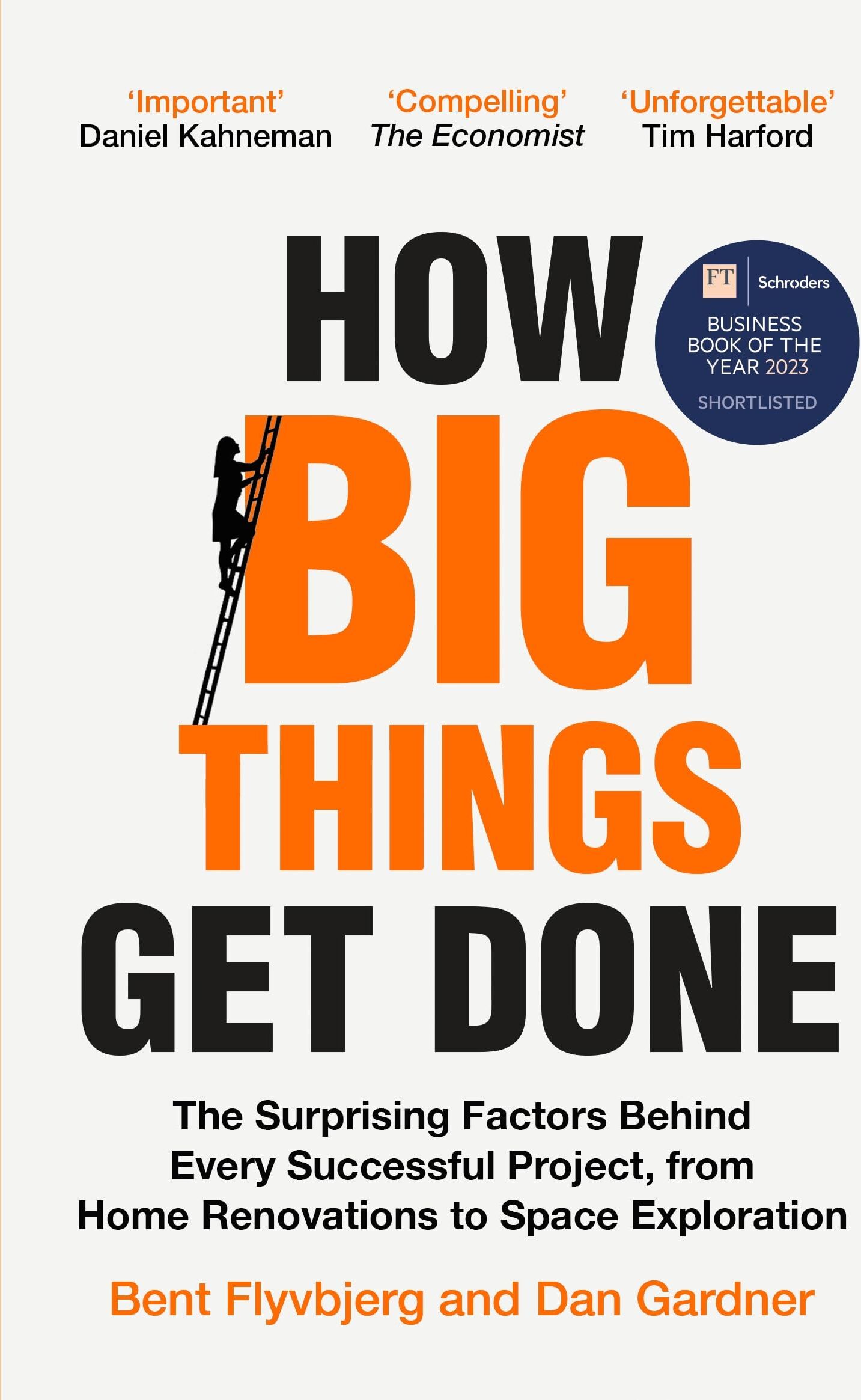
Macmillan Business How Big Things Get Done: The Surprising Factors Behind Every Successful Project, from Home Renovations to Space ExplorationHow Big Things Get Done: The Surprising Factors Behind Every Successful Project, from Home Renovations to Space Exploration Nothing is more inspiring than a big vision that becomes a triumphant new reality. Think of how Apple’s iPod went from a project with a single employee to an enormously successful product launch in eleven months. But such successes are the exception. Consider how London’s Crossrail project delivered five years late and billions over budget. More modest endeavours, whether launching a small business, organizing a conference, or just finishing a work project on time, also commonly fail. Why? Understanding what distinguishes the triumphs from the failures has been the life’s work of Oxford professor Bent Flyvbjerg. In How Big Things Get Done, he identifies the errors that lead projects to fail, and the research-based principles that will make yours succeed: Understand your odds. If you don’t know them, you won’t win. Plan slow, act fast. Getting to the action quick feels right. But it’s wrong. Think right to left. Start with your goal, then identify the steps to get there. Find your Lego. Big is best built from small. Master the unknown unknowns. Most think they can’t, so they fail. Flyvbjerg shows how you can. Full of vivid examples ranging from the building of the Sydney Opera House to the making of the latest Pixar blockbusters, How Big Things Get Done reveals how to get any ambitious project done – on time and on budget.2,99 £*Shipping: 1,99 £Secure redirect to the provider
-
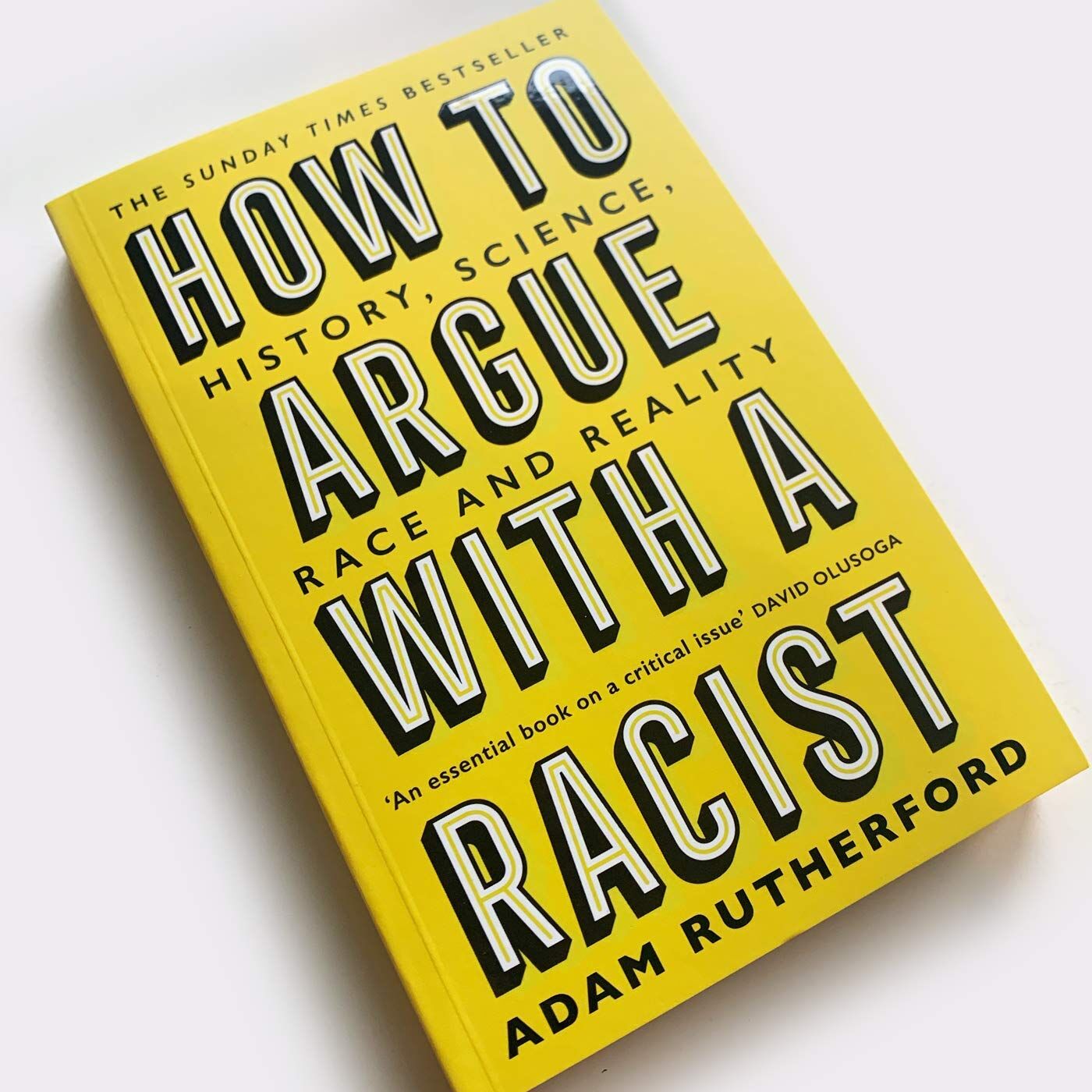
Orion How to Argue With a Racist by Adam Rutherford – Science, Race & Truth ExplainedRacist pseudoscience may be on the rise, but science is no ally to racists. Instead science and history can be powerful allies against bigotry, granting us the clearest view of how people actually are, rather than how we judge them to be. HOW TO ARGUE WITH A RACIST dismantles outdated notions of race by illuminating what modern genetics can and can't tell us about human difference. It is a vital manifesto for a twenty-first century understanding of human evolution and variation, and a timely weapon against the misuse of science to justify racism.3,99 £*Shipping: 1,99 £Secure redirect to the provider
-
Puffin ltd How to Grow Series Collection 3 Books Set By Rachel Morrisroe (How to Grow a Unicorn, How to Grow a Dragon and How to Grow a Mermaid)How to Grow Series Collection 3 Books Set By Rachel Morrisroe (How to Grow a Unicorn, How to Grow a Dragon & How to Grow a Mermaid): How to Grow a Unicorn: A rollicking, rhyming read-aloud treat from wordsmith extraordinaire, debut author Rachel Morrisroe, and the ridiculously talented, bestselling Steven Lenton.Welcome to Mr Pottifer's Parlour of Plants: a magical shop with the most surprising plants you'll ever see! Sarah thinks she's discovered the perfect gift for her garden-loving grandma, but before you can say GARDEN FULL OF UNICORNS, things grow wildly out-of-hand! How to Grow a Dragon: A story that celebrates problem solving, kindness and resourcefulness.An unexpected delivery of dragodil seeds provides the perfect chance for Sarah and Mr Pottifer to grow helpful dragon pets for their customers - or does it? It turns out that these fiery dragons are not very well-behaved at all... and everything soon spirals into smoke-filled, out-of-control DRAGON CHAOS! Can Sarah's quick thinking and green fingers save the day? How to Grow a Mermaid: A new customer at the shop buys some mermaid seeds, and Sarah is only too happy to help him grow them. But when the plants are accidentally given too much sugar, their vines spread throughout the town, flooding the streets and causing a whole heap of MER-MAYHEM! Can Sarah and her new friend use their quick thinking and green fingers to save the day?19,99 £*Shipping: 2,99 £Secure redirect to the provider
-
BBC Books Alan Titchmarsh How to Garden: Small Gardens (How to Garden, 27)Successful gardens can be created in the smallest spaces, and in this inspiring and practical guide Alan Titchmarsh shows how to transform even the tiniest outdoor area into an attractive garden. With ideas for maximizing space and advice on garden design, planning and plant selection, this is the definitive handbook for anyone wanting to create a private haven in limited space. Ideas for front gardens, side passages, courtyards, balconies, rooftops and windowsills Tricks to make small spaces seem larger How to use every inch of space, including containers Easy-to-follow landscaping plans for all garden shapes and styles Guidance on growing vegetables, herbs and fruit in small plots2,67 £*Shipping: 1,99 £Secure redirect to the provider
-
Are you interested in astronomy and space science?
As an AI, I do not have personal interests or preferences. However, I am equipped with vast knowledge about astronomy and space science and can provide information and answer questions on these topics. **
-
What does astronomy research?
Astronomy research involves studying celestial objects such as stars, planets, galaxies, and other phenomena in the universe. Researchers use telescopes, satellites, and other instruments to observe and analyze these objects to better understand their properties, behavior, and evolution. By studying astronomy, researchers aim to answer fundamental questions about the origins of the universe, the nature of dark matter and dark energy, and the potential for life beyond Earth. **
-
How are space probes sent on exploration missions?
Space probes are sent on exploration missions using powerful rockets that launch them into space. These rockets provide the necessary thrust to escape Earth's gravity and propel the probe towards its destination. Once in space, the probe's trajectory is carefully calculated to ensure it reaches its target planet or celestial body. The probe is equipped with various instruments and communication systems to collect data and send it back to Earth. **
-
Is astronomy a science?
Yes, astronomy is considered a science. It is the study of celestial objects such as stars, planets, galaxies, and the universe as a whole. Astronomers use the scientific method to make observations, form hypotheses, and test their theories. Through the use of mathematics, physics, and technology, astronomers are able to gather data and make predictions about the behavior and properties of objects in space. **
Similar search terms for How
-
Pan Macmillan How Not To Die 2 Books Collection Set by Dr Michael Greger and Gene Stone ( How Not To Diet: The Groundbreaking Science of Healthy, Permanent Weight LHow Not To Die 2 Books Collection Set Dr Michael Greger and Gene Stone Title In This Set: How Not To Diet: The Groundbreaking Science of Healthy, Permanent Weight Loss, How Not To Die14,99 £*Shipping: 2,99 £Secure redirect to the provider
-
Bluebird/Pan ltd The How Not to Die Cookbook, How Not to Age and How Not to Die 3 Books Collection SetThe How Not to Die Cookbook, How Not to Age & How Not to Die 3 Books Collection Set: The How Not to Die Cookbook: Dr Michael Greger, founder of the wildly popular website NutritionFacts, takes his comprehensive, lifesaving science into the kitchen. Why suffer from disease and ill health when the right food is proven to keep you healthy, and without the side effects of drugs? We can avoid heart disease, cancer and our other biggest killers if we use food as medicine, and the How Not To Die Cookbook offers a sustainable and delicious guide to preparing and eating the foods that will prevent and reverse fatal diseases. How Not to Age: Dr Michael Greger digs into the top peer-reviewed anti-ageing research to deliver a complete and optimal guide with simple steps to extend your lifespan and slow the adverse effects of ageing.Inspired by the dietary and lifestyle patterns of the world’s centenarians and residents of ‘blue zone’ regions where people live the longest, Dr Greger presents easy, evidence-based ways to preserve the body functions that keep us feeling youthful, both physically and mentally. How Not to Die: How Not To Die examines each of the most common diseases to reveal what, how and why different foods affect us, and how increasing our consumption of certain foods and avoiding others can dramatically reduce our risk of falling sick and even reverse the effects of disease. It also shares Dr Greger's 'Daily Dozen' - the twelve foods we should all eat every day to stay in the best of health.20,95 £*Shipping: 2,99 £Secure redirect to the provider
-
Pan Macmillan How Not To Die 2 Books Collection Set by Dr Michael Greger and Gene Stone (How Not To Die, How Not To Die Cookbook)How Not To Die Why rely on drugs and surgery to cure you of life-threatening disease when the right decisions can prevent you from falling ill to begin with? How Not To Die gives effective, scientifically-proven nutritional advice to prevent our biggest killers - including heart disease, breast cancer, prostate cancer, high blood pressure and diabetes - and reveals the astounding health benefits that simple dietary choices can provide. How Not To Die Cookbook Dr Michael Greger, founder of the wildly popular website NutritionFacts, takes his comprehensive, lifesaving science into the kitchen. Why suffer from disease and ill health when the right food is proven to keep you healthy, and without the side effects of drugs? We can avoid heart disease, cancer and our other biggest killers if we use food as medicine, and the How Not To Die Cookbook offers a sustainable and delicious guide to preparing and eating the foods that will prevent and reverse fatal diseases.15,45 £*Shipping: 2,99 £Secure redirect to the provider
-
DK The Science of Nutrition: Debunk the Diet Myths and Learn How to Eat Well for Health and HappinessA SUNDAY TIMES BESTSELLER --Is a vegan diet healthier? Should I try going low-carb? Is it always a bad idea to skip a meal? Are superfoods all they're cracked up to be? Is fat still bad for you? Can I eat to improve my chances of conceiving?Science of Nutrition cuts through the noise of conflicting diet advice with clear answers backed up by the very latest research. Recognising that there is no one-size-fits-all when it comes to nutrition, this ground-breaking book has the answers to all your food-related questions, covering every conceivable topic - from gut bacteria to weight management, to heart health and immune support, to vegan diets and intermittent fasting, and everything in between. With an accessible Q&A approach and informative graphics, this nutrition book will debunk popular food myths and diets, redefine nutrition in the modern world, and enable you to make informed decisions that are best suited to you, about what, when, and how to eat. The book's easily digestible and evidence-based advice empowers you to explore the benefits and importance of nutrition, alongside the downright misleading when it comes to the world of food and diet, and to equip yourself with the knowledge and confidence to assess and enhance your approach to nutrition9,99 £*Shipping: 2,99 £Secure redirect to the provider
-
What is the topic of the MSA project in relation to astronomy, space exploration, and the universe?
The topic of the MSA project is the study of the Martian atmosphere and its potential for supporting life. This relates to astronomy, space exploration, and the universe as it involves understanding the conditions on Mars and the possibility of habitability beyond Earth. By studying the Martian atmosphere, scientists aim to gain insights into the potential for life on other planets and the broader search for extraterrestrial life in the universe. **
-
How do you send space probes on exploration missions?
Space probes are sent on exploration missions by launching them into space using rockets. Once in space, the probes are guided to their destination using onboard propulsion systems and navigational instruments. Mission control on Earth communicates with the probes to receive data and send commands, allowing scientists to monitor and control the mission. The probes are equipped with scientific instruments to collect data and images, which are then transmitted back to Earth for analysis. **
-
How are natural science and technology related?
Natural science and technology are closely related as they both involve the study and understanding of the natural world. Natural science seeks to understand the fundamental principles and laws that govern the natural world, while technology applies this understanding to create practical solutions to real-world problems. Technology often builds upon the knowledge gained from natural science to develop new tools, materials, and processes that improve our lives and our understanding of the natural world. In this way, natural science and technology work hand in hand to advance our understanding and utilization of the natural world. **
-
Is Russia's space exploration at an end?
No, Russia's space exploration is not at an end. While Russia has faced some challenges in its space program, such as budget constraints and technical issues, it continues to be an active player in space exploration. Russia has a long history of achievements in space, including being the first country to launch a satellite and send a human into space. The country is also involved in international collaborations, such as the International Space Station, and has plans for future missions to the moon and Mars. Therefore, Russia's space exploration is far from over. **
* All prices are inclusive of VAT and, if applicable, plus shipping costs. The offer information is based on the details provided by the respective shop and is updated through automated processes. Real-time updates do not occur, so deviations can occur in individual cases. ** Note: Parts of this content were created by AI.