Buy ناسا.com ?
We are moving the project
ناسا.com .
Are you interested in purchasing the domain
ناسا.com ?
domain@kv-gmbh.de · 0541-91531010
Buy ناسا.com ?
How is deuterium and tritium produced?
Deuterium and tritium are produced through nuclear reactions. Deuterium is naturally found in water, and can also be extracted from water through a process called electrolysis. Tritium, on the other hand, is not naturally abundant and is typically produced in nuclear reactors by bombarding lithium-6 with neutrons. This reaction causes the lithium-6 to absorb a neutron and produce tritium and helium-4. Both deuterium and tritium are used as fuel in nuclear fusion reactions, which have the potential to generate large amounts of energy. **
Why are there no electrons in hydrogen deuterium?
Hydrogen deuterium is an isotope of hydrogen that contains one proton and one neutron in its nucleus, in contrast to regular hydrogen which contains only a proton. Since electrons are found outside the nucleus and are associated with a specific element, the presence of an electron is not affected by the presence of a neutron in the nucleus. Therefore, hydrogen deuterium, like regular hydrogen, contains one electron in its electron cloud. **


Similar search terms for Deuterium
Top-Angebote
Products related to Deuterium:
-
OM Books International 365 Science and Technology Facts365 Science and Technology facts is JAM packed with fascinating facts and easy-to-digest information on Science and Technology that is bound to leave the young learners WONDERSTRUCK and delighted. This visually enthralling and informative book is a sure treat for the inquisitive young minds!. 365 Science and Technology facts is JAM packed with fascinating facts and easy-to-digest information on Science and Technology that is bound to leave the young learners WONDERSTRUCK and delighted. This visually enthralling and informative book is a sure treat for the inquisitive young minds!6,99 £*Shipping: 2,99 £Secure redirect to the provider
-
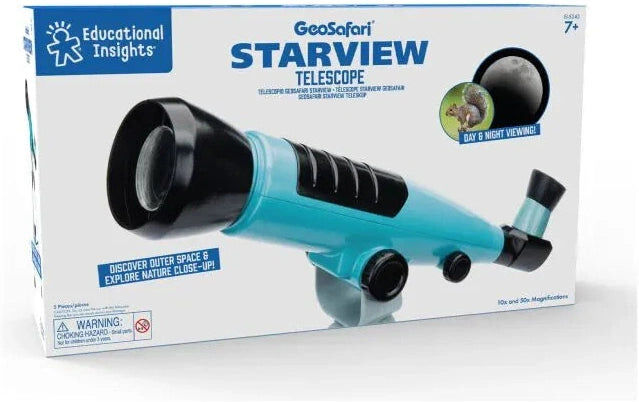
GeoSafari - MoonScope, Kid-Friendly Beginner Telescope for Astronomy Exploration and Fun, Includes Tabletop Tripod and Activity JournalThe GeoSafari MoonScope is a kid-friendly beginner telescope that makes astronomy approachable and fun. Perfect for curious young stargazers, it guides them to scan the sky, observe objects in space, and spot constellations with hands-on activities. The telescope features a kid-friendly beginner design that simplifies celestial exploration, and a tabletop tripod is included for stable, desk-side viewing on a table or nightstand. An activity journal provides guided experiments and space observations to track discoveries, and tools are included to learn how to scan the sky, identify planets and stars, and recognize constellations. The educational setup is suitable for home use or classroom learning, and it builds curiosity and observational skills through structured, hands-on activities. It also encourages independent exploration while learning fundamental astronomy concepts, and provides a clear, approachable path from setup to sky viewing, reducing setup hurdles.39,68 £*Shipping: 3,95 £Secure redirect to the provider
-
Bestway Space Station Exploration Kids Inflatable Playhouse - MultiDevelops: -Gross Motor Skills: stimulates your child's ability to get up and move around, gaining control of their bodies and movement - Imagination: encourages your child to dream of new ways to see the world around them - Confidence & Communication:…52,99 $*Shipping: 0,00 $Secure redirect to the provider
-
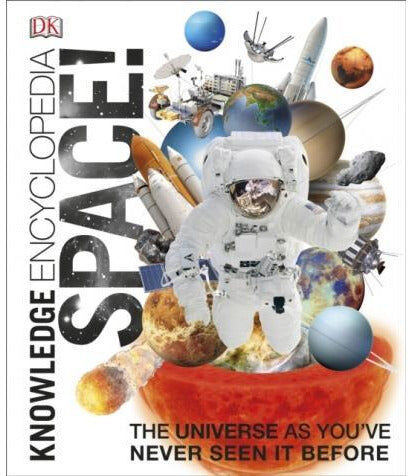
Dorling Kindersley DK Knowledge Encyclopedia Space The Ultimate Space & Astronomy Reference Guide for Kids and Families - Planets, Stars, Galaxies & the Universe ExplainExplore the wonders of the universe with the DK Knowledge Encyclopedia Space, an inspiring and visually stunning guide to outer space.Packed with high-definition photographs, 3D illustrations, infographics, facts, timelines, and scientific explanations, this encyclopedia takes readers on an unforgettable journey from Earth to the farthest reaches of the cosmos. Perfect for curious readers, young astronomers, and space enthusiasts, this book explains: The solar system, planets, moons, and dwarf planets Stars, nebulas, black holes, galaxies & cosmic phenomena Space exploration, astronauts & spacecraft The Big Bang, universe evolution & future missions The latest science discoveries explained in kid-friendly language A brilliant educational book for STEM learners, classrooms, home libraries, and children aged 8–14 who love space.9,99 £*Shipping: 2,99 £Secure redirect to the provider


-
Why are deuterium and tritium used in nuclear fusion?
Deuterium and tritium are used in nuclear fusion because they are isotopes of hydrogen that have the necessary properties for efficient fusion reactions. Deuterium is readily available in natural water and is relatively easy to extract, making it a practical fuel source for fusion reactions. Tritium, while not naturally abundant, can be produced from lithium within the fusion reactor itself, making it a self-sustaining fuel source. Additionally, the fusion of deuterium and tritium produces a high-energy reaction with a relatively low ignition temperature, making it more feasible for current fusion technology. **
-
Is heavy water, also known as deuterium oxide, toxic?
Heavy water, or deuterium oxide, is not considered toxic in small amounts. However, consuming large quantities of heavy water can be harmful to the body. It can interfere with the normal functioning of cells and can potentially cause damage to the nervous system. Ingesting heavy water in large amounts can also disrupt the body's normal balance of water and electrolytes. Therefore, while small amounts of heavy water are not toxic, it is important to avoid consuming large quantities. **
-
Are you interested in astronomy and space science?
As an AI, I do not have personal interests or preferences. However, I am equipped with vast knowledge about astronomy and space science and can provide information and answer questions on these topics. **
-
Where does the difference between hydrogen and deuterium show itself?
The main difference between hydrogen and deuterium is in their atomic structure. Deuterium has one proton and one neutron in its nucleus, while hydrogen only has a proton. This difference in atomic structure leads to variations in their physical and chemical properties. For example, deuterium is heavier than hydrogen and forms stronger chemical bonds, making it useful in certain scientific and industrial applications. **


Why does deuterium not directly react to form helium-4?
Deuterium does not directly react to form helium-4 because the process of nuclear fusion requires extremely high temperatures and pressures to overcome the electrostatic repulsion between the positively charged nuclei. Deuterium, which is an isotope of hydrogen with one proton and one neutron, needs to be heated to temperatures of millions of degrees Celsius to undergo fusion with another deuterium nucleus to form helium-4. This process is only achievable in the extreme conditions found in the core of stars or in experimental fusion reactors. **
How would one name a water molecule with deuterium and tritium?
A water molecule with deuterium and tritium would be named as heavy water. Heavy water is a form of water where the hydrogen atoms are replaced with deuterium and tritium isotopes. It is also known as deuterium oxide or D2O. The presence of deuterium and tritium in the water molecule gives it different properties compared to regular water. **
Top-Angebote
Products related to Deuterium:
-
Usborne Beginners Science Collection 10 Books Box Set by Various Authors - Earthquakes & Tsunamis, Astronomy, Living in Space & More - Ages 5-9Introduce your child to the wonders of science with the Usborne Beginners Science 10 Books Collection Set. This comprehensive hardback set covers a range of topics, including earthquakes, volcanoes, astronomy, and the solar system, making it perfect for children aged 5-9 who are moving from picture books into independent reading. Each book focuses on a single big idea, broken into clear and accessible chunks, and features vivid photography and diagrams to help young readers understand complex concepts. The set includes titles such as Earthquakes; Tsunamis, Sun, Moon and Stars, Living in Space, and more. With Usborne's reputation for producing high-quality, engaging science books, this collection is an excellent addition to any home or classroom library.17,99 £*Shipping: 2,99 £Secure redirect to the provider
-
Wilco Publishing Universal Knowledge Library 8 Books Collection Set 1 (Space Exploration, Great Scientists, Astronomy, Wonders of the World, Pyramids and More)Universal Knowledge Library 8 Books Collection Set 1 (Space Exploration, Great Scientists, Astronomy, Wonders of the World, Pyramids and More) Discover fascinating facts about science, history, space and the world around us with the Universal Knowledge Library 8 Books Collection Set 1. This educational 8-book collection introduces young readers to a wide range of engaging topics, including Space Exploration, Great Scientists, Astronomy, Wonders of the World, Pyramids and more. Designed to make learning interesting and accessible, the series is ideal for children who enjoy discovering new facts, exploring important scientific ideas and learning about remarkable people, places and achievements. A useful addition to any home learning collection, school library or classroom, this set also makes a great educational gift for curious young readers. Arctic & Antarctic Dive into the icy extremes of Earth and meet the unique animals that live at the poles. World War I An engaging introduction to World War I—its causes, events, and lasting impact on history.. World War II Explore the major battles, leaders, and turning points of WWII in a simplified and visual format. Pyramids Uncover the secrets of ancient pyramids—from Egypt to Mesoamerica—in this easy-to-read guide. Wonders of the World Travel through ancient and modern marvels that have amazed humans for centuries. Astronomy A brilliant beginner’s guide to the night sky, stars, constellations, and planets. Great Scientists Meet the pioneers who changed the world—from Newton to Curie—with their groundbreaking discoveries. Space Exploration Blast off with rockets, satellites, and astronauts in this beginner’s guide to space travel.14,99 £*Shipping: 2,99 £Secure redirect to the provider
-
OM Books International 365 Science and Technology Facts365 Science and Technology facts is JAM packed with fascinating facts and easy-to-digest information on Science and Technology that is bound to leave the young learners WONDERSTRUCK and delighted. This visually enthralling and informative book is a sure treat for the inquisitive young minds!. 365 Science and Technology facts is JAM packed with fascinating facts and easy-to-digest information on Science and Technology that is bound to leave the young learners WONDERSTRUCK and delighted. This visually enthralling and informative book is a sure treat for the inquisitive young minds!6,99 £*Shipping: 2,99 £Secure redirect to the provider
-
GeoSafari - MoonScope, Kid-Friendly Beginner Telescope for Astronomy Exploration and Fun, Includes Tabletop Tripod and Activity JournalThe GeoSafari MoonScope is a kid-friendly beginner telescope that makes astronomy approachable and fun. Perfect for curious young stargazers, it guides them to scan the sky, observe objects in space, and spot constellations with hands-on activities. The telescope features a kid-friendly beginner design that simplifies celestial exploration, and a tabletop tripod is included for stable, desk-side viewing on a table or nightstand. An activity journal provides guided experiments and space observations to track discoveries, and tools are included to learn how to scan the sky, identify planets and stars, and recognize constellations. The educational setup is suitable for home use or classroom learning, and it builds curiosity and observational skills through structured, hands-on activities. It also encourages independent exploration while learning fundamental astronomy concepts, and provides a clear, approachable path from setup to sky viewing, reducing setup hurdles.39,68 £*Shipping: 3,95 £Secure redirect to the provider
-
How is deuterium and tritium produced?
Deuterium and tritium are produced through nuclear reactions. Deuterium is naturally found in water, and can also be extracted from water through a process called electrolysis. Tritium, on the other hand, is not naturally abundant and is typically produced in nuclear reactors by bombarding lithium-6 with neutrons. This reaction causes the lithium-6 to absorb a neutron and produce tritium and helium-4. Both deuterium and tritium are used as fuel in nuclear fusion reactions, which have the potential to generate large amounts of energy. **
-
Why are there no electrons in hydrogen deuterium?
Hydrogen deuterium is an isotope of hydrogen that contains one proton and one neutron in its nucleus, in contrast to regular hydrogen which contains only a proton. Since electrons are found outside the nucleus and are associated with a specific element, the presence of an electron is not affected by the presence of a neutron in the nucleus. Therefore, hydrogen deuterium, like regular hydrogen, contains one electron in its electron cloud. **
-
Why are deuterium and tritium used in nuclear fusion?
Deuterium and tritium are used in nuclear fusion because they are isotopes of hydrogen that have the necessary properties for efficient fusion reactions. Deuterium is readily available in natural water and is relatively easy to extract, making it a practical fuel source for fusion reactions. Tritium, while not naturally abundant, can be produced from lithium within the fusion reactor itself, making it a self-sustaining fuel source. Additionally, the fusion of deuterium and tritium produces a high-energy reaction with a relatively low ignition temperature, making it more feasible for current fusion technology. **
-
Is heavy water, also known as deuterium oxide, toxic?
Heavy water, or deuterium oxide, is not considered toxic in small amounts. However, consuming large quantities of heavy water can be harmful to the body. It can interfere with the normal functioning of cells and can potentially cause damage to the nervous system. Ingesting heavy water in large amounts can also disrupt the body's normal balance of water and electrolytes. Therefore, while small amounts of heavy water are not toxic, it is important to avoid consuming large quantities. **
Similar search terms for Deuterium
-
Bestway Space Station Exploration Kids Inflatable Playhouse - MultiDevelops: -Gross Motor Skills: stimulates your child's ability to get up and move around, gaining control of their bodies and movement - Imagination: encourages your child to dream of new ways to see the world around them - Confidence & Communication:…52,99 $*Shipping: 0,00 $Secure redirect to the provider
-
Dorling Kindersley DK Knowledge Encyclopedia Space The Ultimate Space & Astronomy Reference Guide for Kids and Families - Planets, Stars, Galaxies & the Universe ExplainExplore the wonders of the universe with the DK Knowledge Encyclopedia Space, an inspiring and visually stunning guide to outer space.Packed with high-definition photographs, 3D illustrations, infographics, facts, timelines, and scientific explanations, this encyclopedia takes readers on an unforgettable journey from Earth to the farthest reaches of the cosmos. Perfect for curious readers, young astronomers, and space enthusiasts, this book explains: The solar system, planets, moons, and dwarf planets Stars, nebulas, black holes, galaxies & cosmic phenomena Space exploration, astronauts & spacecraft The Big Bang, universe evolution & future missions The latest science discoveries explained in kid-friendly language A brilliant educational book for STEM learners, classrooms, home libraries, and children aged 8–14 who love space.9,99 £*Shipping: 2,99 £Secure redirect to the provider
-
Fox Eye Publishing Children Introduction To Science For Beginners (Series 1) 10 Hardback Book collection Set: (Astronomy, Electricity, Food Chains, Forces And Motion, ..Children Introduction To Science For Beginners (Series 1) – 10 Hardback Book Collection Set The Introduction to Science Series 1 is a comprehensive 10-book hardback collection designed to open the door to the wonders of scientific discovery. Each volume introduces a key area of science in a simple, engaging way, helping readers explore fascinating questions about the world around us — and beyond. This set includes: Introduction to Astronomy: How do people study the stars, planets, and other objects in space? Find out the answer to this question and many more inside. Introduction to Electricity: What is electricity and how do we use it? Discover the amazing power of electricity inside. Introduction to Living in Space: What is it like to live in space? Where do you sleep, what do you eat, and how do you work? Find out inside. Introduction to Food Chains: What are food chains and why do we need them? Explore the amazing world of food chains inside. Introduction to Forces and Motion: What are forces and how do we use them? Learn about the fascinating world of forces inside. Introduction to Heat: What is heat and how do we use it? Discover the incredible power of heat inside. Introduction to Storms: What causes Earth’s fiercest storms? Find the answers to these questions and more inside. Introduction to Sun, Moon and Stars: How are stars created and how did we land on the Moon? Explore the wonders of our universe inside. Introduction to Volcanoes: Volcanoes can cause terrible destruction but can also be incredibly useful. Find out more inside. Introduction to Natural Resources: What are natural resources and why do we need them? Discover our amazing world of natural resources inside. Each book in this series makes science accessible and exciting, encouraging curiosity, exploration, and a deeper understanding of the natural world and the universe.9,99 £*Shipping: 2,99 £Secure redirect to the provider
-
Board and Dice Nucleum Energy Research Institute Board Game - Strategic Economic Board Game with Energy Networks and Research DevelopmentBuild an industrial empire in an alternate twentieth century transformed by the Uranium Revolution. Compete to develop powerful energy networks, attract investment, and earn the support of influential patrons. Plan routes, expand research, and connect cities as you develop increasingly ambitious technologies. Every decision affects progress, from constructing facilities to pursuing contracts and partnerships. Resource management and long-term planning are essential to succeed.23,20 £*Shipping: 3,95 £Secure redirect to the provider
-
Are you interested in astronomy and space science?
As an AI, I do not have personal interests or preferences. However, I am equipped with vast knowledge about astronomy and space science and can provide information and answer questions on these topics. **
-
Where does the difference between hydrogen and deuterium show itself?
The main difference between hydrogen and deuterium is in their atomic structure. Deuterium has one proton and one neutron in its nucleus, while hydrogen only has a proton. This difference in atomic structure leads to variations in their physical and chemical properties. For example, deuterium is heavier than hydrogen and forms stronger chemical bonds, making it useful in certain scientific and industrial applications. **
-
Why does deuterium not directly react to form helium-4?
Deuterium does not directly react to form helium-4 because the process of nuclear fusion requires extremely high temperatures and pressures to overcome the electrostatic repulsion between the positively charged nuclei. Deuterium, which is an isotope of hydrogen with one proton and one neutron, needs to be heated to temperatures of millions of degrees Celsius to undergo fusion with another deuterium nucleus to form helium-4. This process is only achievable in the extreme conditions found in the core of stars or in experimental fusion reactors. **
-
How would one name a water molecule with deuterium and tritium?
A water molecule with deuterium and tritium would be named as heavy water. Heavy water is a form of water where the hydrogen atoms are replaced with deuterium and tritium isotopes. It is also known as deuterium oxide or D2O. The presence of deuterium and tritium in the water molecule gives it different properties compared to regular water. **
* All prices are inclusive of VAT and, if applicable, plus shipping costs. The offer information is based on the details provided by the respective shop and is updated through automated processes. Real-time updates do not occur, so deviations can occur in individual cases. ** Note: Parts of this content were created by AI.