Buy ناسا.com ?
We are moving the project
ناسا.com .
Are you interested in purchasing the domain
ناسا.com ?
domain@kv-gmbh.de · 0541-91531010
Buy ناسا.com ?
What is dispersion in physics?
Dispersion in physics refers to the separation of different wavelengths of light as they pass through a medium. This separation occurs because the speed of light is different for different wavelengths, causing them to bend at different angles. This effect is responsible for phenomena such as the splitting of white light into its component colors when passing through a prism. Dispersion is also important in the study of wave propagation, where different wavelengths of waves can travel at different speeds through a medium, leading to their separation over time. **
How do you apply dispersion paint?
To apply dispersion paint, start by preparing the surface by cleaning it thoroughly and making any necessary repairs. Next, apply a primer if needed. Stir the dispersion paint well before use and apply it evenly using a brush, roller, or sprayer. Work in small sections, overlapping each stroke to ensure even coverage. Allow the paint to dry completely between coats, and apply additional coats as needed for the desired finish. **


Similar search terms for Dispersion
Top-Angebote
Products related to Dispersion:
-
OM Books International 365 Science and Technology Facts365 Science and Technology facts is JAM packed with fascinating facts and easy-to-digest information on Science and Technology that is bound to leave the young learners WONDERSTRUCK and delighted. This visually enthralling and informative book is a sure treat for the inquisitive young minds!. 365 Science and Technology facts is JAM packed with fascinating facts and easy-to-digest information on Science and Technology that is bound to leave the young learners WONDERSTRUCK and delighted. This visually enthralling and informative book is a sure treat for the inquisitive young minds!6,99 £*Shipping: 2,99 £Secure redirect to the provider
-
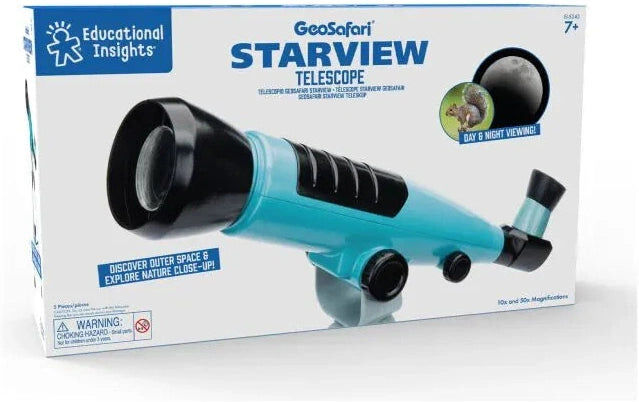
GeoSafari - MoonScope, Kid-Friendly Beginner Telescope for Astronomy Exploration and Fun, Includes Tabletop Tripod and Activity JournalThe GeoSafari MoonScope is a kid-friendly beginner telescope that makes astronomy approachable and fun. Perfect for curious young stargazers, it guides them to scan the sky, observe objects in space, and spot constellations with hands-on activities. The telescope features a kid-friendly beginner design that simplifies celestial exploration, and a tabletop tripod is included for stable, desk-side viewing on a table or nightstand. An activity journal provides guided experiments and space observations to track discoveries, and tools are included to learn how to scan the sky, identify planets and stars, and recognize constellations. The educational setup is suitable for home use or classroom learning, and it builds curiosity and observational skills through structured, hands-on activities. It also encourages independent exploration while learning fundamental astronomy concepts, and provides a clear, approachable path from setup to sky viewing, reducing setup hurdles.39,68 £*Shipping: 3,95 £Secure redirect to the provider
-
WAGNER Universal W 575 FLEXiO paint sprayer for dispersion/latex paints, varnishes & glazes - Interior Usage, Covers 15 m²-6 min, Capacity 1300 ml/800 ml, 630 W, New(Damaged Box)Suitable for emulsion and latex paints designed for indoor applications. When paired with the included Standard spray attachment, it can also accommodate water-based and solvent-based enamels, varnishes, protective wood-staining products, oils, and various other substances. Ideal for projects of various sizes, from small to large. Incorporating Flexio technology, it delivers consistent coverage with all standard materials, even unthinned ones, in just one application. Featuring a detachable gun for quick changes of spray attachments and effortless cleaning. Equipped with two air volume settings to achieve optimal outcomes with materials of both low and high viscosity. The adjustable paint jet allows for precise adaptation to the object being painted. Allows for continuous adjustment of material volume, ensuring precision in painting. Incorporates a patented I-SPRAY nozzle for fine atomization and excellent viscosity tolerance, even when working with highly viscous materials. Powered by the X-BOOST turbine for added potency and increased working speed.119,00 £*Shipping: 0,00 £Secure redirect to the provider
-
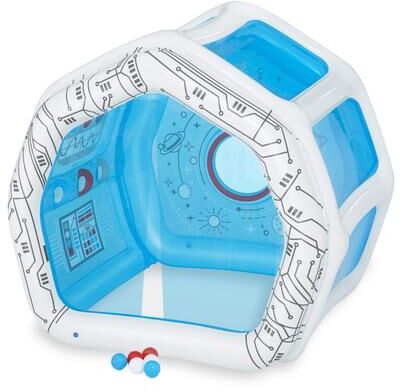
Bestway Space Station Exploration Kids Inflatable Playhouse - MultiDevelops: -Gross Motor Skills: stimulates your child's ability to get up and move around, gaining control of their bodies and movement - Imagination: encourages your child to dream of new ways to see the world around them - Confidence & Communication:…52,99 $*Shipping: 0,00 $Secure redirect to the provider


-
How do you mix dispersion paints?
To mix dispersion paints, start by pouring the desired amount of paint into a mixing container. Then, add the appropriate amount of water according to the paint manufacturer's instructions. Use a stirring stick or paint mixer to thoroughly mix the paint and water together until the consistency is smooth and even. It's important to follow the specific instructions provided by the paint manufacturer to ensure the proper mixing ratio and achieve the best results. **
-
Are you interested in astronomy and space science?
As an AI, I do not have personal interests or preferences. However, I am equipped with vast knowledge about astronomy and space science and can provide information and answer questions on these topics. **
-
Is dispersion the same as standard deviation?
Dispersion and standard deviation are related concepts, but they are not the same. Dispersion refers to the spread or variability of a set of data points, while standard deviation is a specific measure of dispersion. Standard deviation is a statistical measure that quantifies the amount of variation or dispersion of a set of values. It is calculated by taking the square root of the variance, which is the average of the squared differences from the mean. Therefore, while dispersion is a broader concept, standard deviation is a specific statistical measure of dispersion. **
-
What is the meaning of dispersion in biology?
In biology, dispersion refers to the pattern of spacing of individuals within a population. It describes how individuals are distributed in a particular area, whether they are clumped together, evenly spaced, or randomly dispersed. Understanding dispersion patterns can provide insights into the social structure, resource availability, and interactions within a population. It is an important concept in ecology and population biology as it helps scientists study the dynamics and behavior of species in their natural habitats. **

How do you calculate the range of dispersion?
The range of dispersion is calculated by subtracting the smallest value from the largest value in a data set. This gives the total spread or range of the data. For example, if a data set has values ranging from 10 to 50, the range of dispersion would be 50 - 10 = 40. The range of dispersion is a simple measure of variability in a data set and is useful for understanding the spread of values. **
How can one check for dispersion in statistics?
One way to check for dispersion in statistics is to calculate the range, which is the difference between the maximum and minimum values in a dataset. A larger range indicates greater dispersion. Another method is to calculate the variance or standard deviation, which measures the average distance of each data point from the mean. A higher variance or standard deviation indicates greater dispersion. Additionally, creating a box plot or histogram can visually show the spread of the data and help identify any outliers that may contribute to dispersion. **
Top-Angebote
Products related to Dispersion:
-
Usborne Beginners Science Collection 10 Books Box Set by Various Authors - Earthquakes & Tsunamis, Astronomy, Living in Space & More - Ages 5-9Introduce your child to the wonders of science with the Usborne Beginners Science 10 Books Collection Set. This comprehensive hardback set covers a range of topics, including earthquakes, volcanoes, astronomy, and the solar system, making it perfect for children aged 5-9 who are moving from picture books into independent reading. Each book focuses on a single big idea, broken into clear and accessible chunks, and features vivid photography and diagrams to help young readers understand complex concepts. The set includes titles such as Earthquakes; Tsunamis, Sun, Moon and Stars, Living in Space, and more. With Usborne's reputation for producing high-quality, engaging science books, this collection is an excellent addition to any home or classroom library.17,99 £*Shipping: 2,99 £Secure redirect to the provider
-
Wilco Publishing Universal Knowledge Library 8 Books Collection Set 1 (Space Exploration, Great Scientists, Astronomy, Wonders of the World, Pyramids and More)Universal Knowledge Library 8 Books Collection Set 1 (Space Exploration, Great Scientists, Astronomy, Wonders of the World, Pyramids and More) Discover fascinating facts about science, history, space and the world around us with the Universal Knowledge Library 8 Books Collection Set 1. This educational 8-book collection introduces young readers to a wide range of engaging topics, including Space Exploration, Great Scientists, Astronomy, Wonders of the World, Pyramids and more. Designed to make learning interesting and accessible, the series is ideal for children who enjoy discovering new facts, exploring important scientific ideas and learning about remarkable people, places and achievements. A useful addition to any home learning collection, school library or classroom, this set also makes a great educational gift for curious young readers. Arctic & Antarctic Dive into the icy extremes of Earth and meet the unique animals that live at the poles. World War I An engaging introduction to World War I—its causes, events, and lasting impact on history.. World War II Explore the major battles, leaders, and turning points of WWII in a simplified and visual format. Pyramids Uncover the secrets of ancient pyramids—from Egypt to Mesoamerica—in this easy-to-read guide. Wonders of the World Travel through ancient and modern marvels that have amazed humans for centuries. Astronomy A brilliant beginner’s guide to the night sky, stars, constellations, and planets. Great Scientists Meet the pioneers who changed the world—from Newton to Curie—with their groundbreaking discoveries. Space Exploration Blast off with rockets, satellites, and astronauts in this beginner’s guide to space travel.14,99 £*Shipping: 2,99 £Secure redirect to the provider
-
OM Books International 365 Science and Technology Facts365 Science and Technology facts is JAM packed with fascinating facts and easy-to-digest information on Science and Technology that is bound to leave the young learners WONDERSTRUCK and delighted. This visually enthralling and informative book is a sure treat for the inquisitive young minds!. 365 Science and Technology facts is JAM packed with fascinating facts and easy-to-digest information on Science and Technology that is bound to leave the young learners WONDERSTRUCK and delighted. This visually enthralling and informative book is a sure treat for the inquisitive young minds!6,99 £*Shipping: 2,99 £Secure redirect to the provider
-
GeoSafari - MoonScope, Kid-Friendly Beginner Telescope for Astronomy Exploration and Fun, Includes Tabletop Tripod and Activity JournalThe GeoSafari MoonScope is a kid-friendly beginner telescope that makes astronomy approachable and fun. Perfect for curious young stargazers, it guides them to scan the sky, observe objects in space, and spot constellations with hands-on activities. The telescope features a kid-friendly beginner design that simplifies celestial exploration, and a tabletop tripod is included for stable, desk-side viewing on a table or nightstand. An activity journal provides guided experiments and space observations to track discoveries, and tools are included to learn how to scan the sky, identify planets and stars, and recognize constellations. The educational setup is suitable for home use or classroom learning, and it builds curiosity and observational skills through structured, hands-on activities. It also encourages independent exploration while learning fundamental astronomy concepts, and provides a clear, approachable path from setup to sky viewing, reducing setup hurdles.39,68 £*Shipping: 3,95 £Secure redirect to the provider
-
What is dispersion in physics?
Dispersion in physics refers to the separation of different wavelengths of light as they pass through a medium. This separation occurs because the speed of light is different for different wavelengths, causing them to bend at different angles. This effect is responsible for phenomena such as the splitting of white light into its component colors when passing through a prism. Dispersion is also important in the study of wave propagation, where different wavelengths of waves can travel at different speeds through a medium, leading to their separation over time. **
-
How do you apply dispersion paint?
To apply dispersion paint, start by preparing the surface by cleaning it thoroughly and making any necessary repairs. Next, apply a primer if needed. Stir the dispersion paint well before use and apply it evenly using a brush, roller, or sprayer. Work in small sections, overlapping each stroke to ensure even coverage. Allow the paint to dry completely between coats, and apply additional coats as needed for the desired finish. **
-
How do you mix dispersion paints?
To mix dispersion paints, start by pouring the desired amount of paint into a mixing container. Then, add the appropriate amount of water according to the paint manufacturer's instructions. Use a stirring stick or paint mixer to thoroughly mix the paint and water together until the consistency is smooth and even. It's important to follow the specific instructions provided by the paint manufacturer to ensure the proper mixing ratio and achieve the best results. **
-
Are you interested in astronomy and space science?
As an AI, I do not have personal interests or preferences. However, I am equipped with vast knowledge about astronomy and space science and can provide information and answer questions on these topics. **
Similar search terms for Dispersion
-
WAGNER Universal W 575 FLEXiO paint sprayer for dispersion/latex paints, varnishes & glazes - Interior Usage, Covers 15 m²-6 min, Capacity 1300 ml/800 ml, 630 W, New(Damaged Box)Suitable for emulsion and latex paints designed for indoor applications. When paired with the included Standard spray attachment, it can also accommodate water-based and solvent-based enamels, varnishes, protective wood-staining products, oils, and various other substances. Ideal for projects of various sizes, from small to large. Incorporating Flexio technology, it delivers consistent coverage with all standard materials, even unthinned ones, in just one application. Featuring a detachable gun for quick changes of spray attachments and effortless cleaning. Equipped with two air volume settings to achieve optimal outcomes with materials of both low and high viscosity. The adjustable paint jet allows for precise adaptation to the object being painted. Allows for continuous adjustment of material volume, ensuring precision in painting. Incorporates a patented I-SPRAY nozzle for fine atomization and excellent viscosity tolerance, even when working with highly viscous materials. Powered by the X-BOOST turbine for added potency and increased working speed.119,00 £*Shipping: 0,00 £Secure redirect to the provider
-
Bestway Space Station Exploration Kids Inflatable Playhouse - MultiDevelops: -Gross Motor Skills: stimulates your child's ability to get up and move around, gaining control of their bodies and movement - Imagination: encourages your child to dream of new ways to see the world around them - Confidence & Communication:…52,99 $*Shipping: 0,00 $Secure redirect to the provider
-
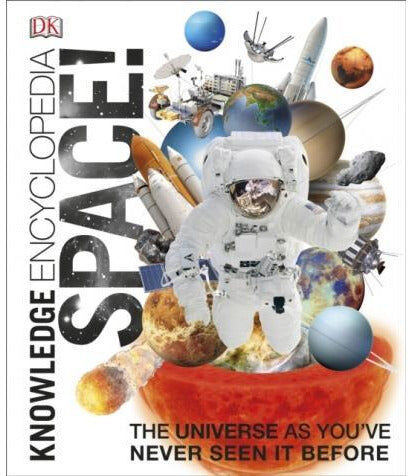
Dorling Kindersley DK Knowledge Encyclopedia Space The Ultimate Space & Astronomy Reference Guide for Kids and Families - Planets, Stars, Galaxies & the Universe ExplainExplore the wonders of the universe with the DK Knowledge Encyclopedia Space, an inspiring and visually stunning guide to outer space.Packed with high-definition photographs, 3D illustrations, infographics, facts, timelines, and scientific explanations, this encyclopedia takes readers on an unforgettable journey from Earth to the farthest reaches of the cosmos. Perfect for curious readers, young astronomers, and space enthusiasts, this book explains: The solar system, planets, moons, and dwarf planets Stars, nebulas, black holes, galaxies & cosmic phenomena Space exploration, astronauts & spacecraft The Big Bang, universe evolution & future missions The latest science discoveries explained in kid-friendly language A brilliant educational book for STEM learners, classrooms, home libraries, and children aged 8–14 who love space.9,99 £*Shipping: 2,99 £Secure redirect to the provider
-
Fox Eye Publishing Children Introduction To Science For Beginners (Series 1) 10 Hardback Book collection Set: (Astronomy, Electricity, Food Chains, Forces And Motion, ..Children Introduction To Science For Beginners (Series 1) – 10 Hardback Book Collection Set The Introduction to Science Series 1 is a comprehensive 10-book hardback collection designed to open the door to the wonders of scientific discovery. Each volume introduces a key area of science in a simple, engaging way, helping readers explore fascinating questions about the world around us — and beyond. This set includes: Introduction to Astronomy: How do people study the stars, planets, and other objects in space? Find out the answer to this question and many more inside. Introduction to Electricity: What is electricity and how do we use it? Discover the amazing power of electricity inside. Introduction to Living in Space: What is it like to live in space? Where do you sleep, what do you eat, and how do you work? Find out inside. Introduction to Food Chains: What are food chains and why do we need them? Explore the amazing world of food chains inside. Introduction to Forces and Motion: What are forces and how do we use them? Learn about the fascinating world of forces inside. Introduction to Heat: What is heat and how do we use it? Discover the incredible power of heat inside. Introduction to Storms: What causes Earth’s fiercest storms? Find the answers to these questions and more inside. Introduction to Sun, Moon and Stars: How are stars created and how did we land on the Moon? Explore the wonders of our universe inside. Introduction to Volcanoes: Volcanoes can cause terrible destruction but can also be incredibly useful. Find out more inside. Introduction to Natural Resources: What are natural resources and why do we need them? Discover our amazing world of natural resources inside. Each book in this series makes science accessible and exciting, encouraging curiosity, exploration, and a deeper understanding of the natural world and the universe.9,99 £*Shipping: 2,99 £Secure redirect to the provider
-
Is dispersion the same as standard deviation?
Dispersion and standard deviation are related concepts, but they are not the same. Dispersion refers to the spread or variability of a set of data points, while standard deviation is a specific measure of dispersion. Standard deviation is a statistical measure that quantifies the amount of variation or dispersion of a set of values. It is calculated by taking the square root of the variance, which is the average of the squared differences from the mean. Therefore, while dispersion is a broader concept, standard deviation is a specific statistical measure of dispersion. **
-
What is the meaning of dispersion in biology?
In biology, dispersion refers to the pattern of spacing of individuals within a population. It describes how individuals are distributed in a particular area, whether they are clumped together, evenly spaced, or randomly dispersed. Understanding dispersion patterns can provide insights into the social structure, resource availability, and interactions within a population. It is an important concept in ecology and population biology as it helps scientists study the dynamics and behavior of species in their natural habitats. **
-
How do you calculate the range of dispersion?
The range of dispersion is calculated by subtracting the smallest value from the largest value in a data set. This gives the total spread or range of the data. For example, if a data set has values ranging from 10 to 50, the range of dispersion would be 50 - 10 = 40. The range of dispersion is a simple measure of variability in a data set and is useful for understanding the spread of values. **
-
How can one check for dispersion in statistics?
One way to check for dispersion in statistics is to calculate the range, which is the difference between the maximum and minimum values in a dataset. A larger range indicates greater dispersion. Another method is to calculate the variance or standard deviation, which measures the average distance of each data point from the mean. A higher variance or standard deviation indicates greater dispersion. Additionally, creating a box plot or histogram can visually show the spread of the data and help identify any outliers that may contribute to dispersion. **
* All prices are inclusive of VAT and, if applicable, plus shipping costs. The offer information is based on the details provided by the respective shop and is updated through automated processes. Real-time updates do not occur, so deviations can occur in individual cases. ** Note: Parts of this content were created by AI.