Buy ناسا.com ?
We are moving the project
ناسا.com .
Are you interested in purchasing the domain
ناسا.com ?
domain@kv-gmbh.de · 0541-91531010
Buy ناسا.com ?
Are you interested in astronomy and space science?
As an AI, I do not have personal interests or preferences. However, I am equipped with vast knowledge about astronomy and space science and can provide information and answer questions on these topics. **
How do you draw straight lines in space?
To draw straight lines in space, you can use a ruler or a straight edge to guide your drawing. Alternatively, you can use a straight piece of string or a taut wire to create a straight line. Another method is to use a laser level or a laser pointer to project a straight line onto the surface you are working on. Practice and precision are key to achieving perfectly straight lines in space. **

Similar search terms for Lines
Top-Angebote
Products related to Lines:
-
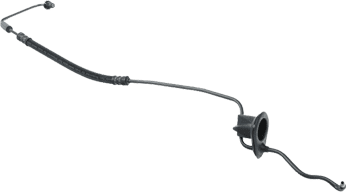
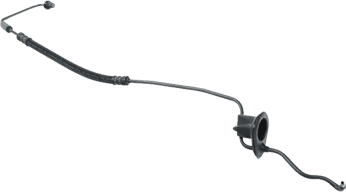
VALEO 804802 Clutch LinesLeft-/right-hand drive vehicles: for left-hand drive vehicles; for manufacturer number: A54054.01; Supplementary Article / Supplementary Info Info 2: with pipe connector; Weight [kg]: 0,152; Construction Year to: 09/2001, 06/1998, 12/2000; Engine Code: JJB; Transmission Code: IB5; Construction Year from: 07/199846,49 £*Shipping: 8,45 £Secure redirect to the provider


-
What are lines and planes in space in mathematics?
In mathematics, lines and planes in space are geometric concepts used to describe the relationships between points in three-dimensional space. A line is a straight path that extends infinitely in two opposite directions, while a plane is a flat, two-dimensional surface that extends infinitely in all directions. Lines and planes are fundamental elements in geometry and are used to solve problems related to spatial relationships, such as finding the intersection of two lines or determining the distance between a point and a plane. **
-
What is the task 9 for lines in space?
Task 9 for lines in space involves finding the point of intersection between two lines. This task requires determining whether the lines are parallel, intersecting, or skew (neither parallel nor intersecting). If the lines are parallel, the task involves determining if they lie in the same plane or are in different planes. If the lines intersect, the task is to find the point of intersection. If the lines are skew, the task is to find the closest distance between the two lines. **
-
What does astronomy research?
Astronomy research involves studying celestial objects such as stars, planets, galaxies, and other phenomena in the universe. Researchers use telescopes, satellites, and other instruments to observe and analyze these objects to better understand their properties, behavior, and evolution. By studying astronomy, researchers aim to answer fundamental questions about the origins of the universe, the nature of dark matter and dark energy, and the potential for life beyond Earth. **
-
Is astronomy a science?
Yes, astronomy is considered a science. It is the study of celestial objects such as stars, planets, galaxies, and the universe as a whole. Astronomers use the scientific method to make observations, form hypotheses, and test their theories. Through the use of mathematics, physics, and technology, astronomers are able to gather data and make predictions about the behavior and properties of objects in space. **

Can two lines in space be collinear and intersect? How can one tell that the lines do not intersect?
No, two lines in space cannot be collinear and intersect at the same time. Collinear lines are lines that lie on the same straight line, so they would never intersect. One can tell that two lines do not intersect by checking if they are parallel or skew. If the lines are parallel, they will never intersect, and if they are skew, they will not intersect in space. **
Why are equipotential lines always perpendicular to field lines?
Equipotential lines are always perpendicular to field lines because the electric field is always perpendicular to the equipotential surface. This is because the electric field is the gradient of the electric potential, and the gradient is always perpendicular to the equipotential surface. Therefore, the equipotential lines, which represent points of equal electric potential, must be perpendicular to the electric field lines. This relationship ensures that work done in moving a charge along an equipotential line is zero, as the electric field does no work in a direction perpendicular to its field lines. **
Top-Angebote
Products related to Lines:
-
Are you interested in astronomy and space science?
As an AI, I do not have personal interests or preferences. However, I am equipped with vast knowledge about astronomy and space science and can provide information and answer questions on these topics. **
-
How do you draw straight lines in space?
To draw straight lines in space, you can use a ruler or a straight edge to guide your drawing. Alternatively, you can use a straight piece of string or a taut wire to create a straight line. Another method is to use a laser level or a laser pointer to project a straight line onto the surface you are working on. Practice and precision are key to achieving perfectly straight lines in space. **
-
What are lines and planes in space in mathematics?
In mathematics, lines and planes in space are geometric concepts used to describe the relationships between points in three-dimensional space. A line is a straight path that extends infinitely in two opposite directions, while a plane is a flat, two-dimensional surface that extends infinitely in all directions. Lines and planes are fundamental elements in geometry and are used to solve problems related to spatial relationships, such as finding the intersection of two lines or determining the distance between a point and a plane. **
-
What is the task 9 for lines in space?
Task 9 for lines in space involves finding the point of intersection between two lines. This task requires determining whether the lines are parallel, intersecting, or skew (neither parallel nor intersecting). If the lines are parallel, the task involves determining if they lie in the same plane or are in different planes. If the lines intersect, the task is to find the point of intersection. If the lines are skew, the task is to find the closest distance between the two lines. **
Similar search terms for Lines
-
VALEO 804802 Clutch LinesLeft-/right-hand drive vehicles: for left-hand drive vehicles; for manufacturer number: A54054.01; Supplementary Article / Supplementary Info Info 2: with pipe connector; Weight [kg]: 0,152; Construction Year to: 09/2001, 06/1998, 12/2000; Engine Code: JJB; Transmission Code: IB5; Construction Year from: 07/199846,49 £*Shipping: 8,45 £Secure redirect to the provider
-
What does astronomy research?
Astronomy research involves studying celestial objects such as stars, planets, galaxies, and other phenomena in the universe. Researchers use telescopes, satellites, and other instruments to observe and analyze these objects to better understand their properties, behavior, and evolution. By studying astronomy, researchers aim to answer fundamental questions about the origins of the universe, the nature of dark matter and dark energy, and the potential for life beyond Earth. **
-
Is astronomy a science?
Yes, astronomy is considered a science. It is the study of celestial objects such as stars, planets, galaxies, and the universe as a whole. Astronomers use the scientific method to make observations, form hypotheses, and test their theories. Through the use of mathematics, physics, and technology, astronomers are able to gather data and make predictions about the behavior and properties of objects in space. **
-
Can two lines in space be collinear and intersect? How can one tell that the lines do not intersect?
No, two lines in space cannot be collinear and intersect at the same time. Collinear lines are lines that lie on the same straight line, so they would never intersect. One can tell that two lines do not intersect by checking if they are parallel or skew. If the lines are parallel, they will never intersect, and if they are skew, they will not intersect in space. **
-
Why are equipotential lines always perpendicular to field lines?
Equipotential lines are always perpendicular to field lines because the electric field is always perpendicular to the equipotential surface. This is because the electric field is the gradient of the electric potential, and the gradient is always perpendicular to the equipotential surface. Therefore, the equipotential lines, which represent points of equal electric potential, must be perpendicular to the electric field lines. This relationship ensures that work done in moving a charge along an equipotential line is zero, as the electric field does no work in a direction perpendicular to its field lines. **
* All prices are inclusive of VAT and, if applicable, plus shipping costs. The offer information is based on the details provided by the respective shop and is updated through automated processes. Real-time updates do not occur, so deviations can occur in individual cases. ** Note: Parts of this content were created by AI.